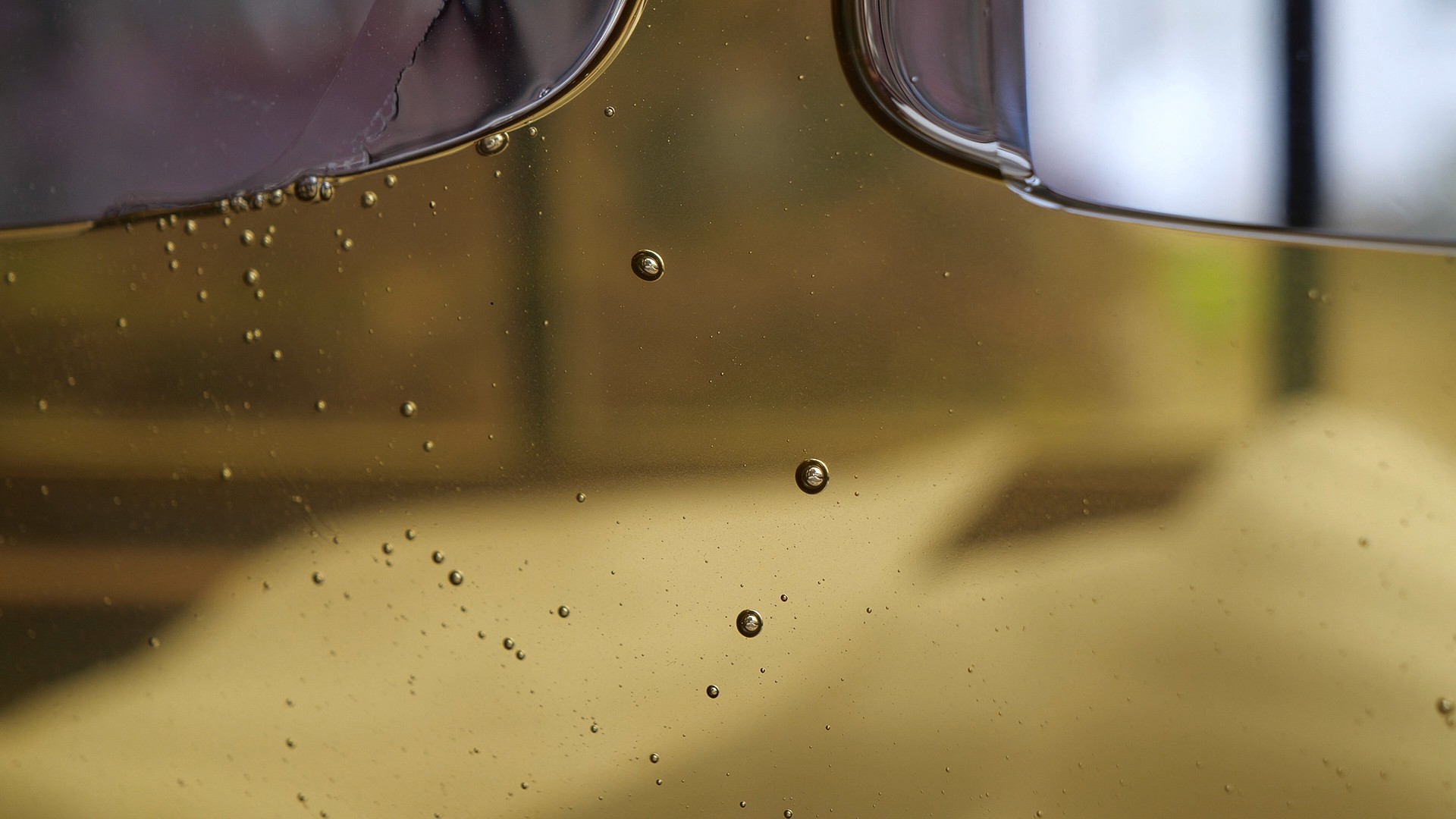
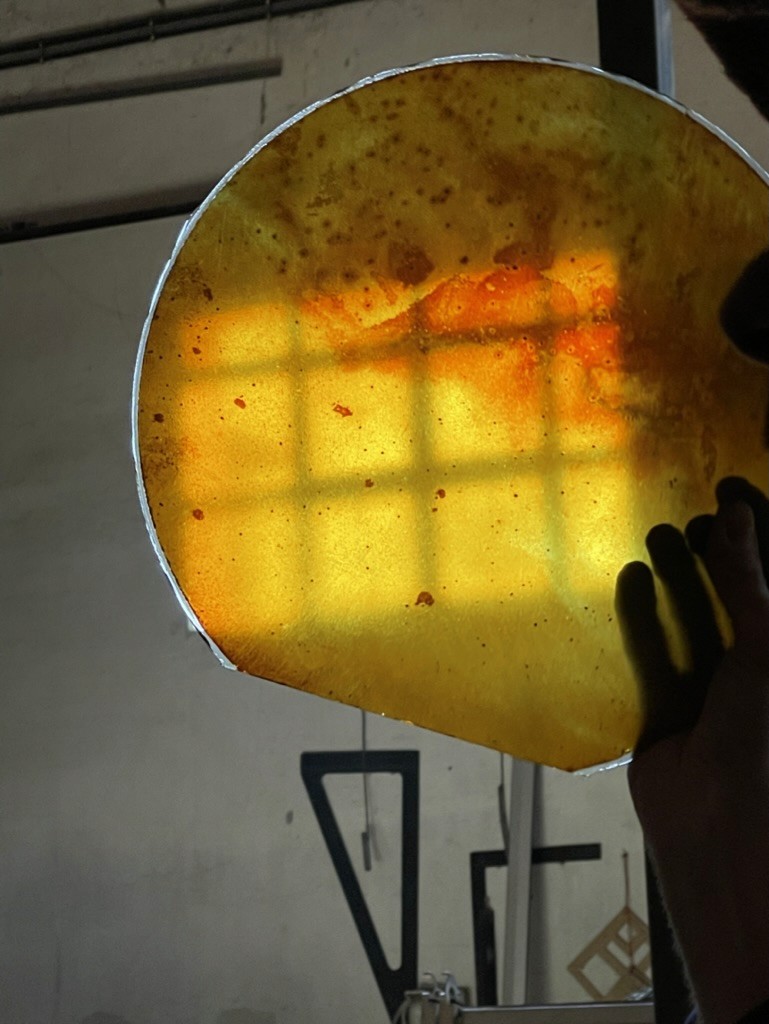
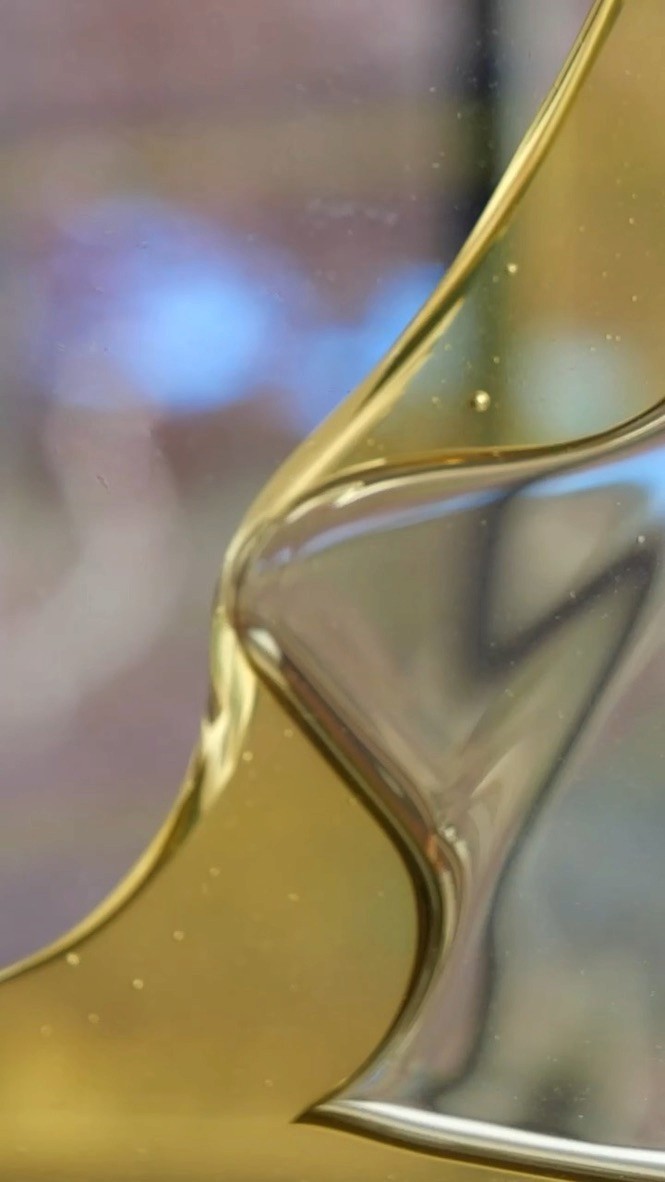
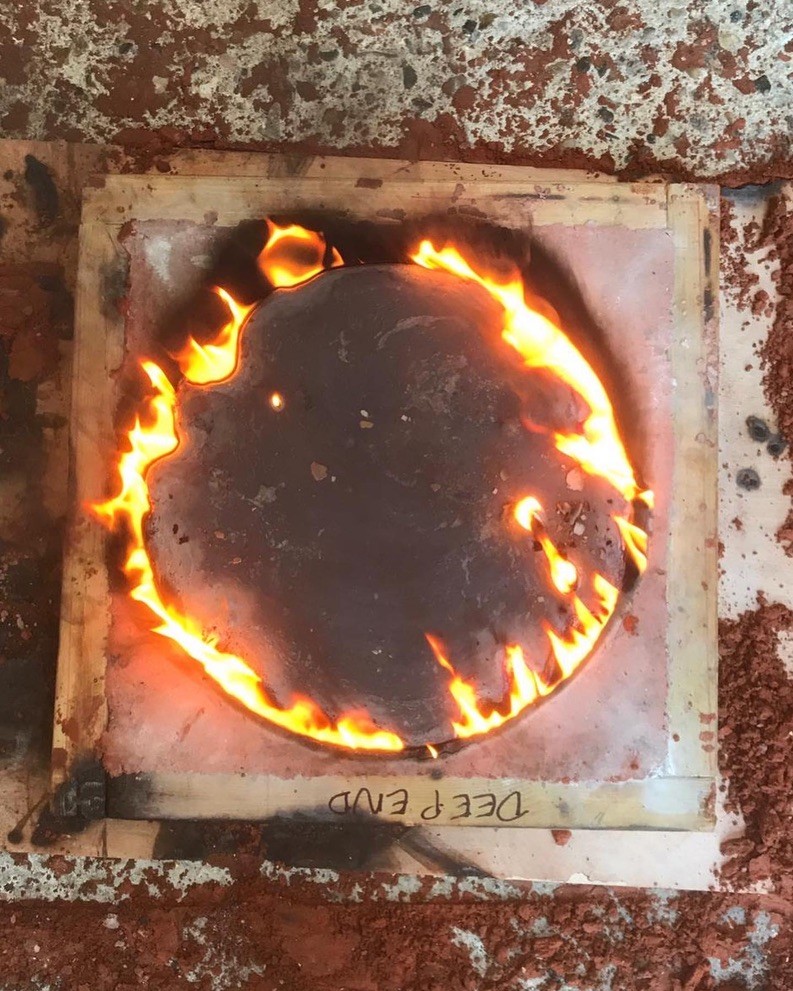
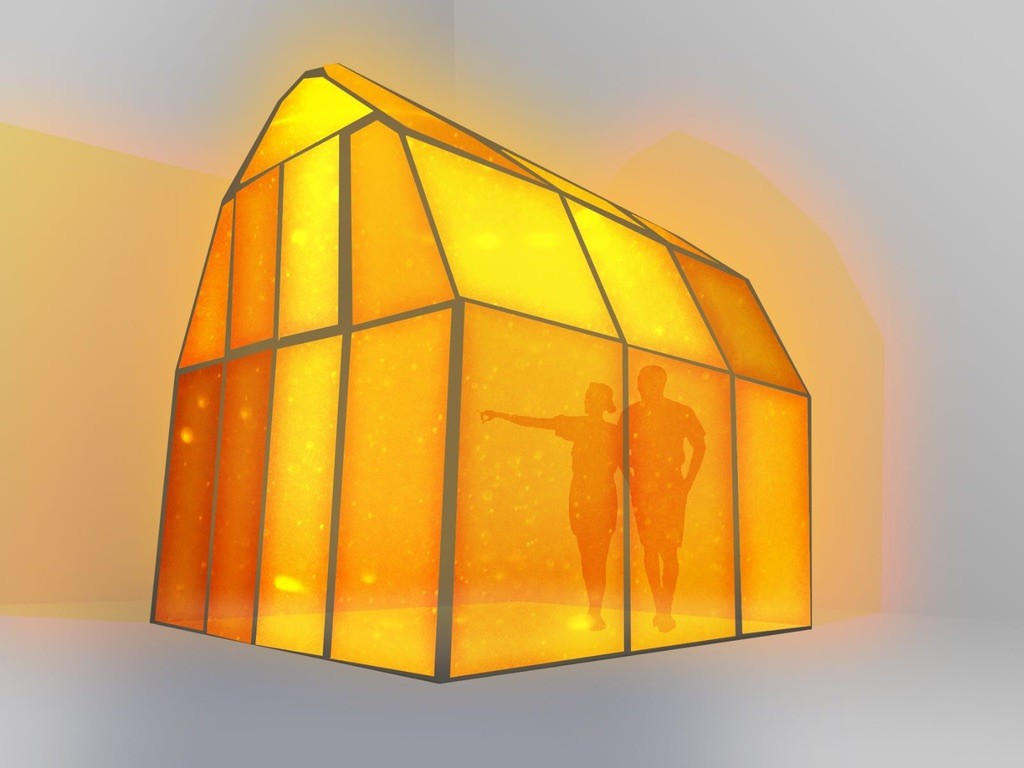
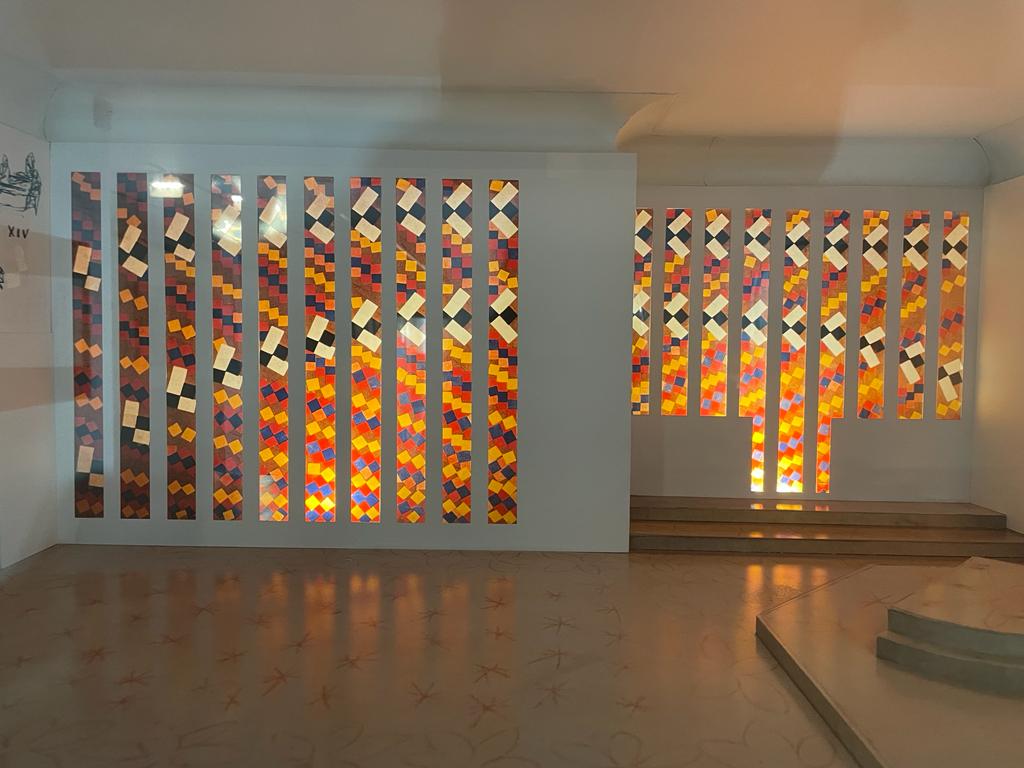
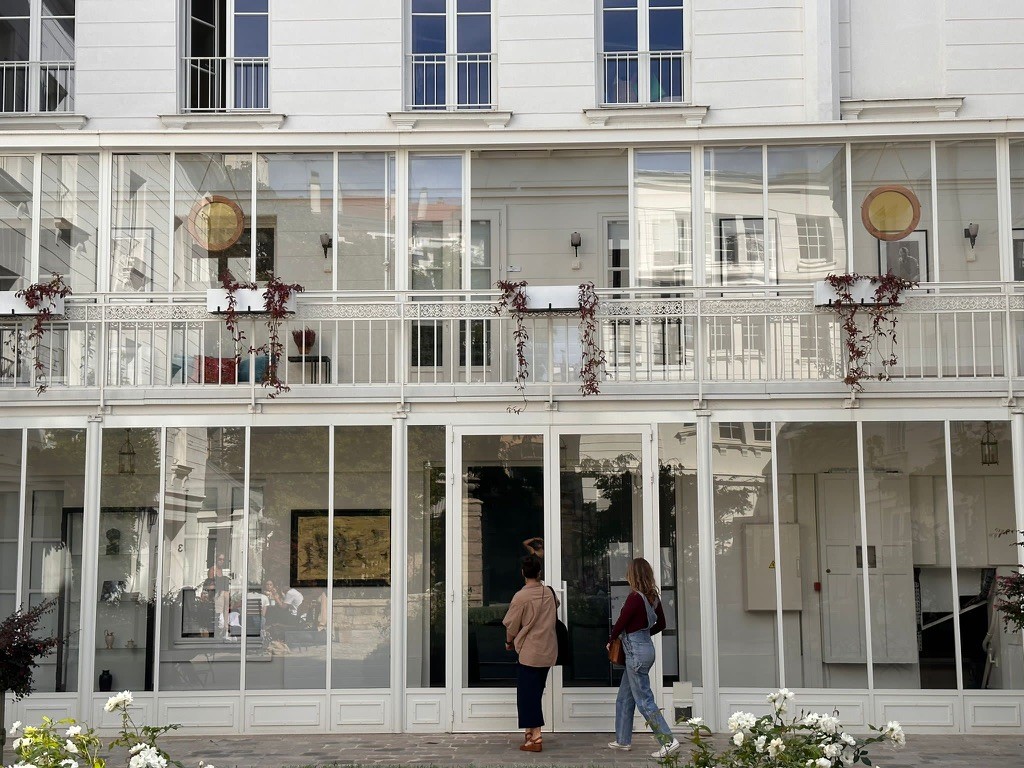
Honey Windows. Reid Hall, Columbia University 2023
2023
Sculpture
Telling the Bees
200 million years ago the earth was covered in green plants. It wasn’t until about 100 million years ago that flowers started to flourish in all shapes and sizes and colours. At that point flowers were being pollinated by beetles, and later wasps, who are the ancestors of the honey bee.
Unlike the wasps, honey bees are vegetarian and created complex social structures, ruled by a Queen Bee that kept peaceful order over communities of up to 50,000. Unlike the wasps, this community could survive the winter months thanks to the good work they had achieved during the flowering season.
Man has been fortunate to live alongside bees since their much later appearance on this earth. We associate gold with warmth and richness. The blessing of honey has been held sacred throughout all religions and folklore.
Bees were the symbol of royalty in ancient Egypt, and bees have come to represent community, continuance, regeneration and connection to the other world of our ancestors.
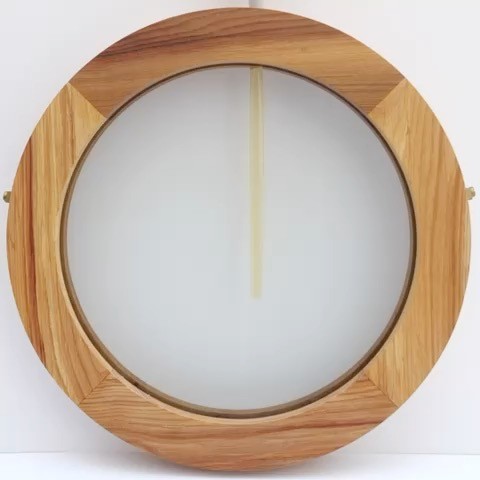
As a source of honey, they represent sweetness, healing and magic. There are cave paintings of bees dating back to 13.000 BC. The shape of the window casts a circular golden shadow on the floor. The Egyptian sun god Ra cried tears that turned into bees, that then created honey in the world. Sharing food brings communities together and creates intergenerational links.
In a whole lifetime of a bee, it produces one teaspoon of honey. Daudy invites us to consider that we could all be citizens working together. Bees look after one another constantly and unconditionally.
There is a poem by Persian poet Hafiz, The Sun Never Says:
Even after all this time,
The Sun never says to the Earth
“You owe me”
Look what happens with a love like that
It lights the whole sky.
The Honey Window will provide the viewer with a formal measure of time and temperature as the honey crystallises and melts within its perfectly sealed two pieces of glass.
Reflecting the impermanent nature of our existence, the honey window will be constantly changing and evolving.
The frame is made in wood from a fallen elm tree in a London Park, whilst the honey is sourced from an ethical supplier in the Morvan.
Drop of Amber: an essay by Indira Dyussebayeva-Ziyabek
Interview with Mathew Armstrong
Columbia University Link: various essays
Filling the Honey Window
Telling The Bees: Kate Daudy at The Institute for Ideas and Imagination, Paris May 2025
Art Spotlight Reid Hall Paris
Artist Kate Daudy
Kate Daudy believes that discussing honey can inspire better communication. A British visual artist and 2024-2025 Fellow at the Institute for Ideas and Imagination, Daudy explores this idea in her ongoing project, Telling the Bees. In this episode, she takes us from the cloud forests of Bolivia to her favorite café on Portobello Road—places that inspire her interdisciplinary art, which delves into intellectual, emotional, and environmental connections.
Columbia University Atelier podcast with Kate Daudy
Daudy Honey Window
Daudy Honey Window