Paper as a Material + notes on making paper and an exhibition at Moulin Richard de Bas, Ambert, France
2021
Experimental
Daudy has a deep interest in paper and for a long time has used paper from the ancient French paper mill Moulin Richard de Bas in Ambert, Auvergne, France https://www.richarddebas.fr/ upon which to make her work and write letters.
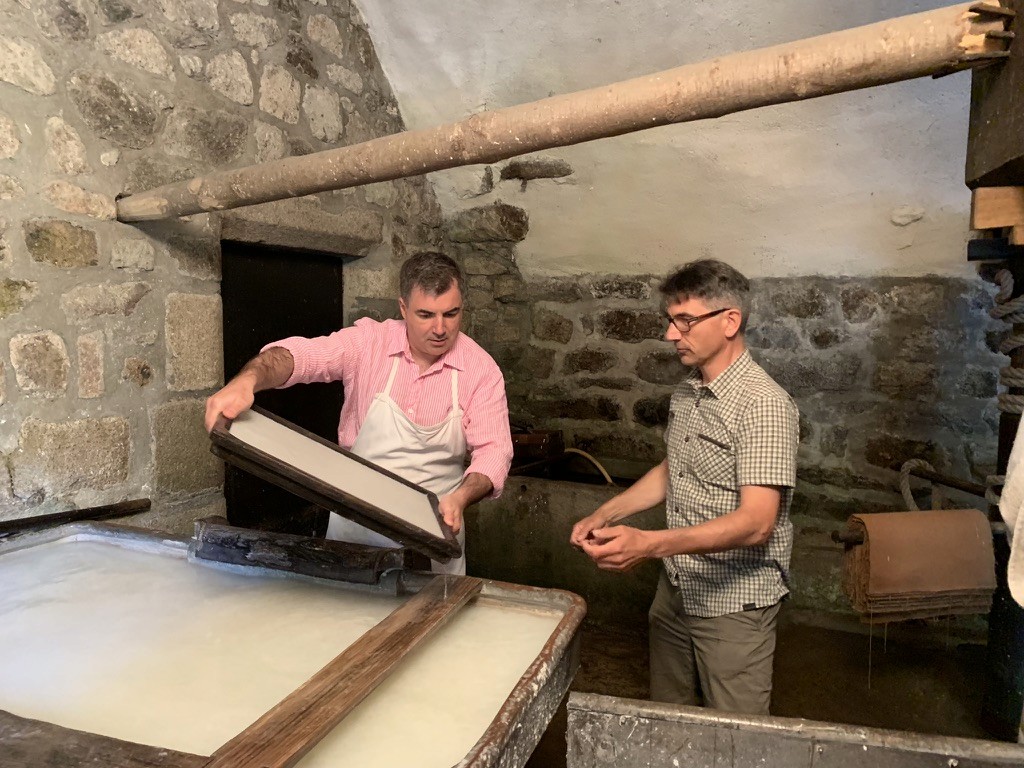
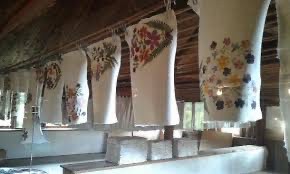
Daudy went with Novoselov in order to make their own paper at the mill. They ended up having a small exhibition there at this magical place in the middle of nowhere, where the stream runs beneath the mill where you can go for a little swim at lunchtime in the sunlight.
https://www.lamontagne.fr/ambert-63600/loisirs/pourquoi-un-prix-nobel-de-physique-expose-cet-ete-au-moulin-richard-de-bas-a-ambert_13605040/
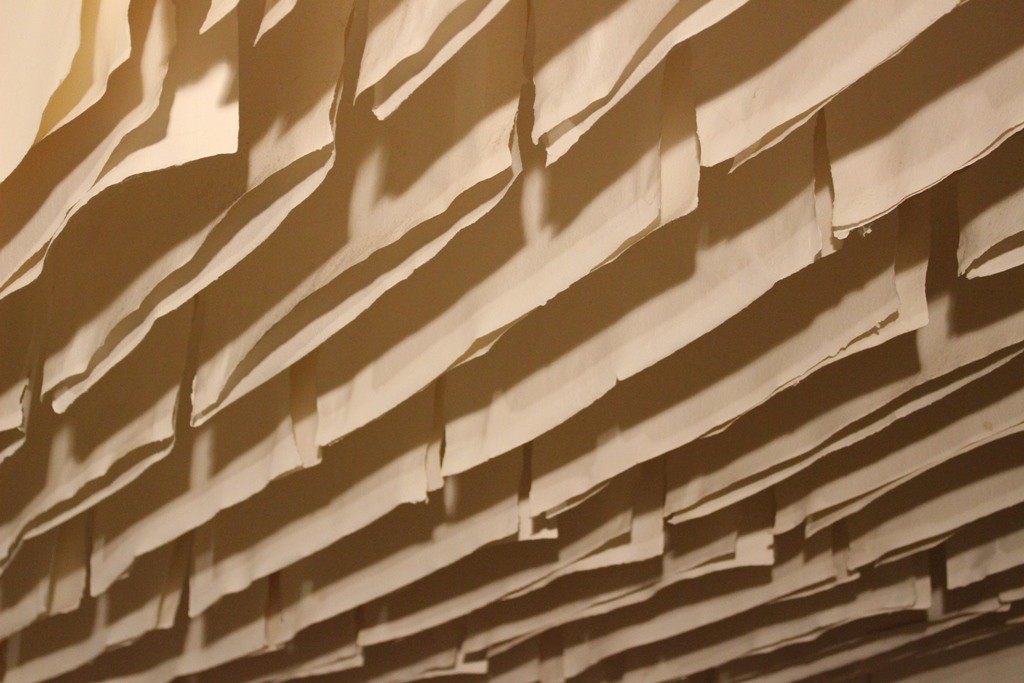
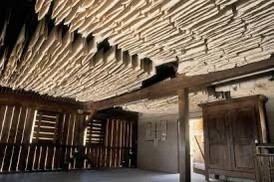
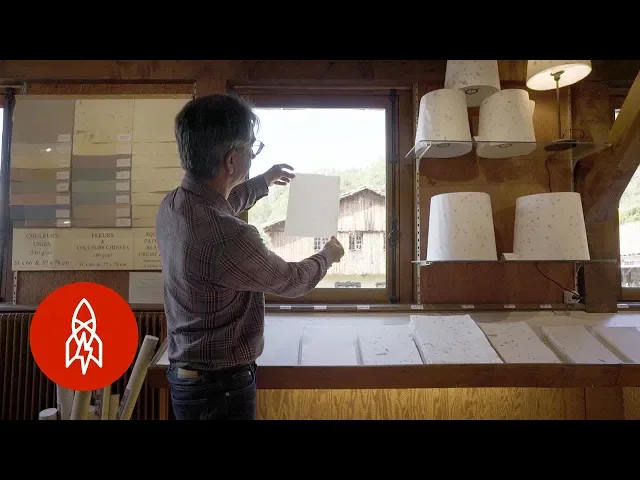
Making the paper from rags is physically hard work as you can see here in the documentary. Each hand made sheet of paper takes weeks to make and months to dry.
See here a short documentary
The mill has been running for 700 years and it is where Dali, Chagall, Georges Braques, Claude Picasso bought their paper. The paper on which the Nobel Prize certificates are written comes from this mill.
Daudy's interest in paper means she uses paper from all over the world in her work. Japanese paper, special paper made from sawdust she found for her first show curated by Cora Sheibani, paper with holes in it, enormous rolls as tall as a man, of handmade paper from Italy she swapped once for some work at the beginning of her career and which stand like sentinels in her paper-and-felt bin at the corner of the cupboard in the studio. The joy and beauty of paper shows in all her work especially the series "She's on The Phone" with paper shapes stacked one on top of the other to create forms that bloom out of the paper and move slightly with the breeze created by a passer-by.
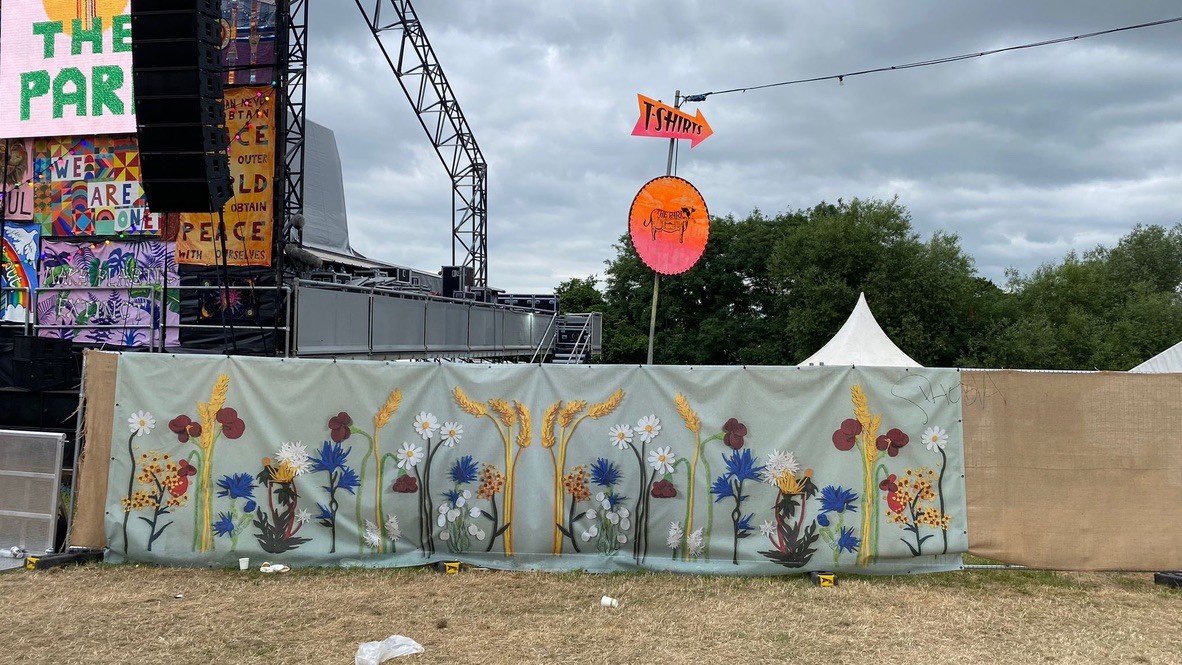
For the show at YSP Wonderchaos Daudy used the paper from the Moulin d'Ambert but also from The Paper Foundation in the north of England https://paper.foundation/product/paper-foundation-swatch-book/ and for the project she made for Glastonbury the postcards were printed on seed paper, a paper embedded with seeds (the overarching project was called Seeds of Hope so that those who received them could plant them if they wished, and grow poppies, cornflower, flax that featured on the banners around the stage.
Daudy discussed her interest in paper during her lecture series at the Sorbonne when she had the retrospective of her work there in 2025. https://en.sorbonneartgallery.com/kate-daudy. At Manchester University she researched the science of paper with Professor Brian Saunders of the Material Engineering Institute https://research.manchester.ac.uk/en/persons/brian.saunders
Postcards, map projects, paper books and chapbooks are an ongoing feature of Daudy's practice. The idea of giving something away is important, combined with the value in communicating through something tangible that can be held in the hand and kept. To this end many of the exhibition catalogues made for Daudy have been made with the great book designers Herman Lelie and Stefania Bonelli. The catalogue for the Egyptian exhibition at the Saatchi was in the shape of an archive box, quite specifically the archive boxes used at Oxford University's Griffith Institute to store the archives of Howard Carter's Tutankhamun discovery.http://www.griffith.ox.ac.uk/ The institute is open to the public.
The Griffith Institute at Oxford also has the most extensive collection in the world of paper "squeezes" a destructive custom of the 19th and early 20th century of making papier mâché casts of Egyptian bas reliefs. http://www.griffith.ox.ac.uk/archive/onlineresources/GISqueezes.html Daudy used this idea of the squeeze with Tomasz Kowalski for a high tech work for American University of Kuwait in 2023, sending a file over to Kuwait to be 3d printed out of sand and resin. When the artist's exhibition was over, the sand and the resin were separated out: the sand put back in the desert and the resin back in its jar. In homage to the Griffith Insitute whence she got the idea, the form of this futuristic experiment was that of an Egyptian head from the Griffith archive.
A further note on paper is that following her first New York City show "Everything Happens for the First Time" Daudy was invited to do a residency in Canada at the home of some collectors who have an extensive collection of ancient "blank" papers. The idea was that the artist could use some of these antique papers on which to make work, and then give the owners first dibs on whatever she made. Unfortunately for the idea, which was a brilliant one, the artist's children were small at the time and she did not like to leave them. But one day hopefully a similar idea will come back.
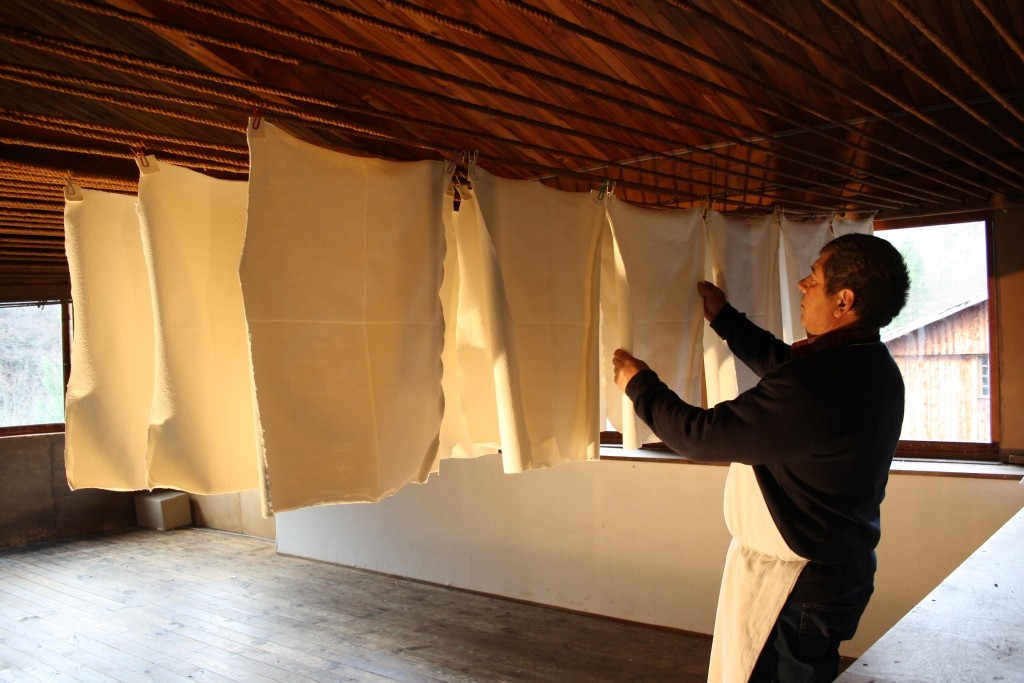
13th century paper-making methods. The mill was the first paper mill in Europe